Every weekend, most Kenyans gather around the fire or in social places to partake in nyama choma. The sizzle of goat meat at roadside joints, the celebration platters in popular clubs and roadside joints, and the diplomacy or business deal conducted over a shared leg of lamb has become our national ritual.
Yet almost no one at the table asks where the animal came from.
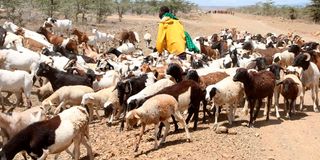
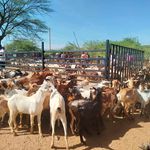
The answer is uncomfortable: it walked hundreds of kilometres from the drylands, raised by a herder whose child studies under a tree, whose savings died in the last drought and whose homeland has been treated as an afterthought by every government since the colonial one drew a line around it and called it a 'closed district.' Kenya loves the meat but has never invested in the hand that raises it.
The numbers tell the story of this contradiction. The arid and semi-arid lands cover over 80 percent of our landmass and are home to more than 16 million Kenyans, 70 percent of the national livestock herd and 90 percent of our wildlife. Pastoral livestock contributes an estimated five to 6 percent of national GDP - more than tea, coffee and horticulture combined.
Yet the current budget allocates a mere Sh2.3 billion to the flagship pastoral economies (DRIVE) programme, while tea and coffee, contributing roughly 2 percent of gross domestic product attracted over Sh6.5 billion in cherry funds, debt waivers and factory modernisation.
This imbalance is not accidental. It is historical, systemic and deliberate. Sessional Paper No. 10 of 1965 directed investment to so-called high potential areas, institutionalising the inequality the colonialists began. But a subtler mechanism now sustains it: statistical invisibility. National accounts track products, not production systems.
Pastoralism's true output - much of it home-consumed or traded informally across borders - never registers in the figures that guide Treasury allocations.
Because pastoral value is invisible, it attracts little budget; because it is underinvested, it stays invisible. Tea and coffee are licensed, weighed, auctioned and taxed; their visibility converts directly into fiscal attention. The measurement gap is itself a form of institutionalised inequality.
The consequences are everywhere. Credit facilities demand collateral in economies where wealth walks on four legs. Drought insurance reaches barely a fraction of the 1.73 million pastoral households.
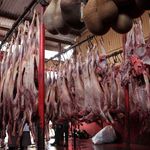
Only seven of our roughly 1,000 slaughterhouses meet international export standards, so meat exports stagnate below Sh20 billion while Kenya exports raw hides at throwaway prices and imports second-hand shoes.
Then weak absorption is cited as proof that pastoral areas cannot handle investment - completing the circle of exclusion. The lesson is not that pastoral economies absorb poorly; it is that they have never been offered instruments built for how they actually work.
The cost of this neglect is already on the books. The 2020 - 2023 drought killed over 2.6 million livestock and left 4.4 million Kenyans in acute food insecurity. The last drought to receive a full government costing, in 2008 - 2011, drained Sh968.6 billion from the economy.
Every cycle triggers the same ritual of emergency relief and costly recovery. Investing in resilience before a drought costs a fraction of responding after one.
Insecurity compounds the waste. Cattle rustling and resource conflict across the northern counties consume vast security budgets, and exclusion is their recruitment ground. Markets, roads and livelihoods do quietly what security operations do expensively.
Yet Kenya has already proven it knows the remedy. Horticulture receives almost no direct subsidy but earns over Sh150 billion in annual exports. Its secret was never handouts; it was enabling investment - airfreight capacity, phytosanitary systems, negotiated market access - that made the sector legible to private capital.
Pastoral livestock, a sector more than twice horticulture's size, has received none of these equivalents: no export-standard abattoirs, no cold chains, no disease-free zones, no sanitary agreements unlocking Gulf markets.
To remedy this situation, our ask is modest and the arithmetic compelling: Sh41 billion over five years - for infrastructure, financial inclusion, cooperatives, value addition and a proper livestock census - could unlock up to Sh350 billion in additional output, half a million jobs and Sh60 billion in annual exports.
The Exchequer need not carry this ask alone. Rangelands are carbon sinks, and climate finance can shoulder a substantial share, provided communities lead rather than merely host such schemes.
Demand for meat and milk will roughly double by 2050 as our population races toward 60 million. That demand will be met either by Kenyan pastoralists or by Ethiopian, Somali, Ugandan and Brazilian suppliers. Inaction does not preserve the status quo; it exports the opportunity.
This is not a plea for charity. It is a demand that Kenya does for livestock in this decade what it did for flowers in the 1990s: build the market infrastructure and let pastoral enterprise do the rest.
The true test of our commitment to equity is not what we say in campaign rallies or over the weekend fireplace, but what we budget for the herder who lit it the fire.
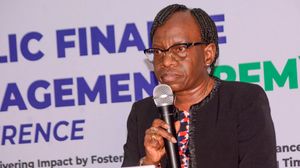
Dr Ido is a governance, management and institutional development specialist with a focus on ASAL development. [email protected]
Unlock a world of exclusive content today!Unlock a world of exclusive content today!